Solar Dryer with Controllable Mirrors.

A low-cost agricultural solar dryer with Arduino-controlled mirror reflectors — designed, validated with FEA, built, and tested from scratch.

ANSYS FEAThermal Systems ArduinoFabrication Sustainable DesignSSN College · 2024
Team
Krishnaa Sudhir Anisha Bharathi Muppalla Venkata Siri
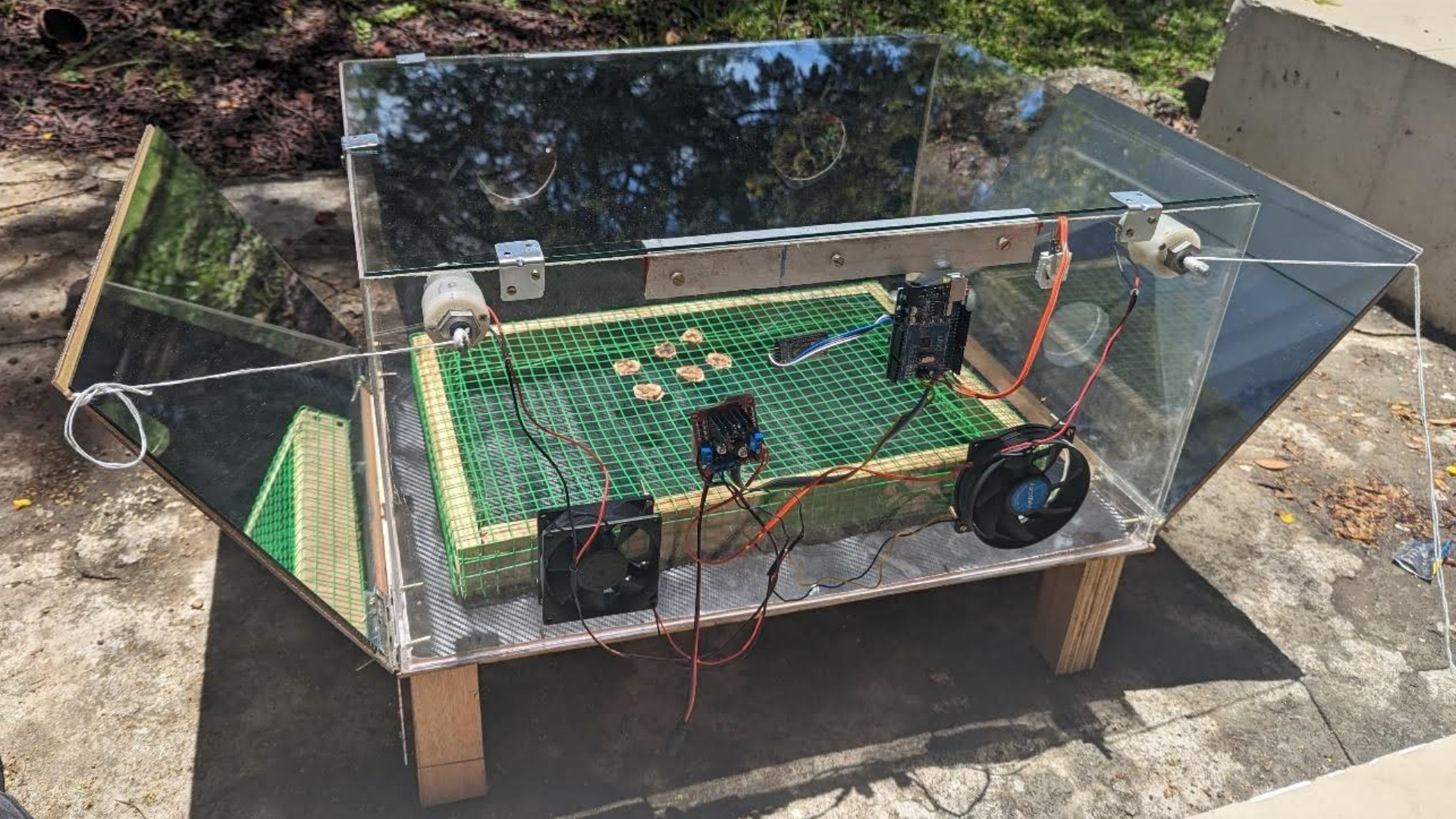
Solar dryer with controllable mirrors
The Problem

Post-harvest losses that don't have to happen.

Spoilage of agricultural produce after harvest is a significant problem in developing regions — often preventable with effective drying. Traditional open-sun drying is slow, unreliable, and exposes produce to contamination. Most solar dryer designs use fixed geometry, missing the opportunity to track the sun and maximise heat input throughout the day.

The Solution

Mirrors that follow the sun.

The design adds Arduino-controlled reflective mirrors to a low-cost solar dryer chassis. DC motors position the mirrors via Bluetooth commands, directing more sunlight onto the collector throughout the day. A DHT sensor monitors temperature and humidity in the drying chamber for real-time performance data. The frame was validated with ANSYS FEA before any material was purchased.

My Role

What I built.

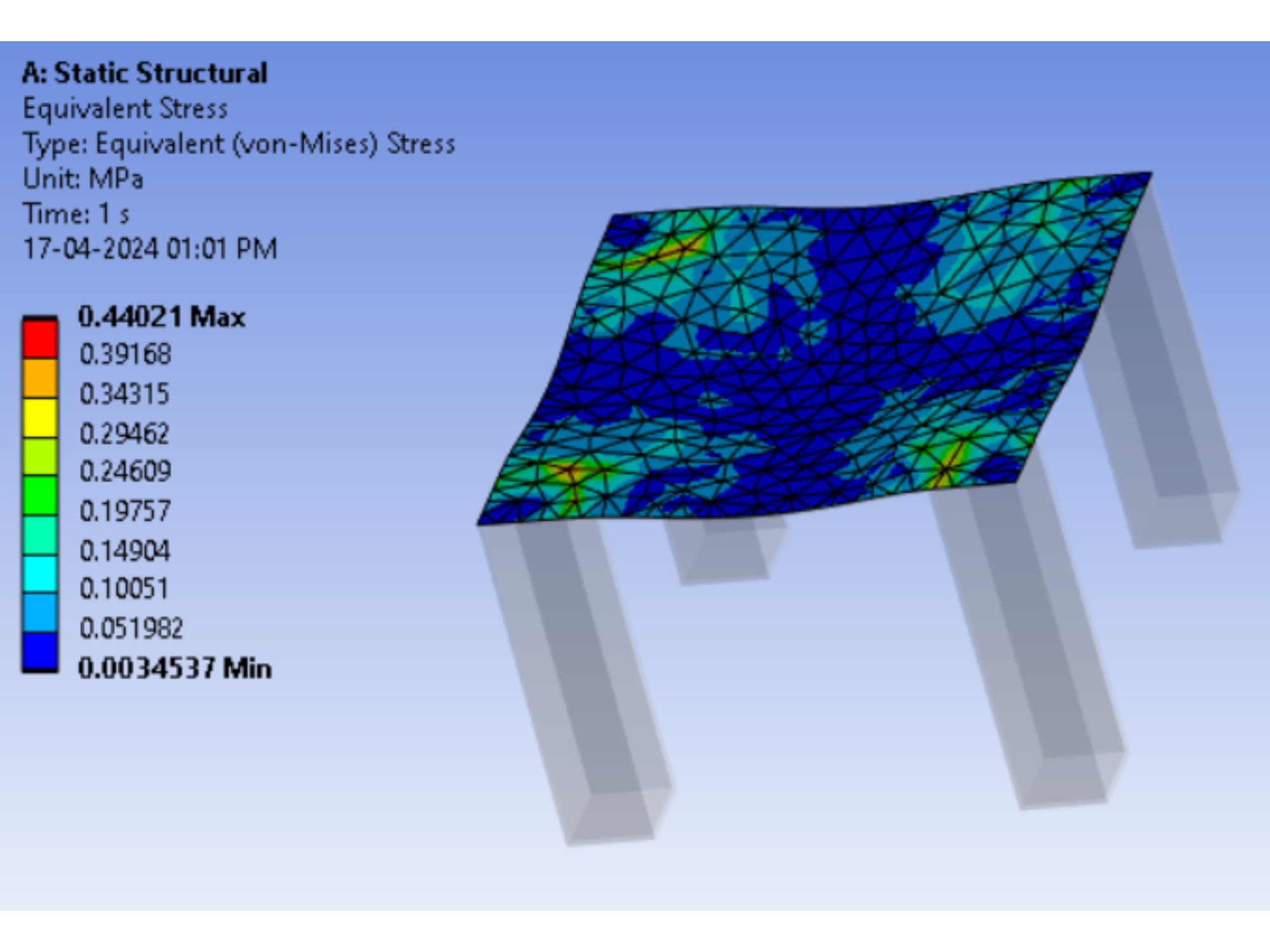
I led the ANSYS finite element analysis of the dryer frame — running structural simulations under expected load conditions to validate the design before committing to materials or fabrication. This was my first substantive real-world use of FEA and taught me a lot about the translation between simulation assumptions and physical reality.

I designed and built the mirror automation system — writing the Arduino code, wiring the L298N motor driver, and integrating the HC-05 Bluetooth module so the mirrors can be repositioned remotely from a phone in real time.

Once the prototype was assembled, I ran the physical testing — operating the dryer, recording temperature and drying rate data at varying conditions, and comparing experimental results against the theoretical model to evaluate performance.

ANSYS FEA · structural Arduino · mirror automation HC-05 Bluetooth L298N motor driver DHT sensing Experimental testing Thermal validation
My contributions
  • Ran ANSYS FEA on the dryer frame to validate structural integrity under load before fabrication began
  • Designed the mirror automation system end-to-end — Arduino code, motor driver wiring, and Bluetooth remote control
  • Led physical prototype testing: recording drying rates and temperature profiles at different airflow and solar conditions
  • Compared experimental results against the numerical model to identify gaps and validate performance
Design to Build

From simulation to prototype.

Solar dryer

Structural validation with ANSYS FEA

Solar dryer testing

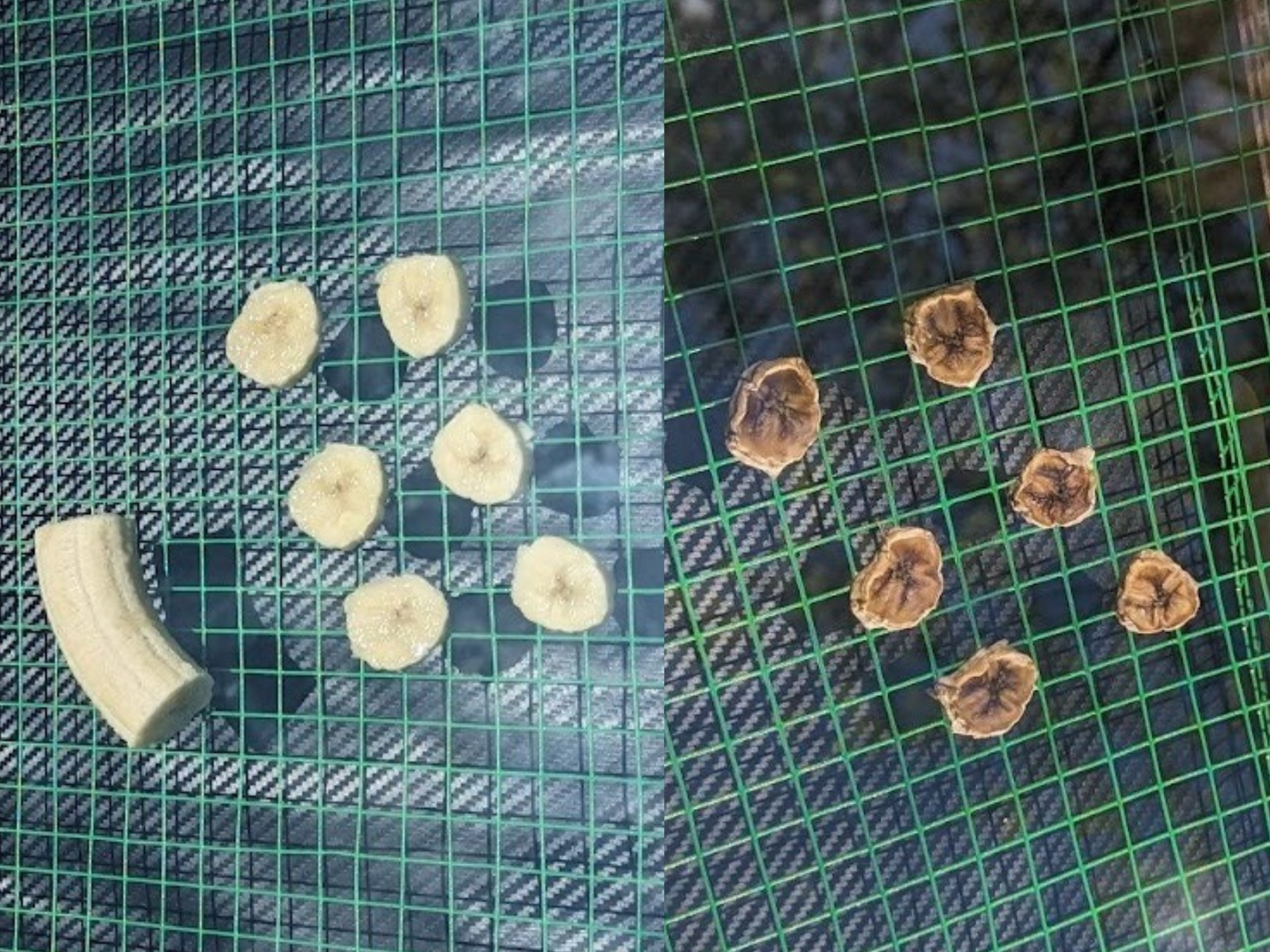
Banana slices before and after solar drying for 2 hours

Get in touch

Let's collaborate.

Connect on LinkedIn →
← PreviousAutonomous Chess Piece Next →Two-Stage Evaporative Cooler