Two-Stage Evaporative Cooler.

Numerical simulation and experimental validation of a combined direct and indirect evaporative cooling system — from MATLAB model to working prototype.

MATLAB SimulationThermal Analysis Heat TransferExperimental Testing SSN College · 2025
Team
Krishnaa Sudhir Anisha B Muppalla Venkata Siri
Two-stage evaporative cooler
The Context

Clean cooling that actually works.

Evaporative cooling is a genuinely sustainable alternative to conventional air conditioning — lower energy, no refrigerants, low cost. But its performance depends heavily on operating conditions, and most real-world systems aren't optimised for their specific climate. The goal was to understand what drives performance in a combined direct-indirect system, and to validate those findings with a physical prototype.

The Approach

Simulate first, build second.

Phase I used MATLAB to model heat and mass transfer in both channels — studying how inlet temperature, humidity, and airflow rate affect outlet supply air conditions. Phase II moved to a physical prototype: a built evaporative cooler with both systems, tested under real conditions to validate how well the numerical predictions held up.

My Role

What I built.

My main contribution was the MATLAB simulation. I wrote the numerical models for both the wet channel (direct evaporative cooling, DEC) and the dry channel (indirect evaporative cooling, IDEC) — setting up the governing equations for evaporative heat and mass transfer, iterating until results were physically plausible, and running the parametric study data across different operating conditions.

In Phase II I ran the physical experiments — varying airflow rates on the built prototype, measuring inlet and outlet temperatures, and collecting the data we used to validate simulation predictions. Seeing where the model matched and where it diverged was one of the most instructive parts of the project — it pushed me to understand the assumptions baked into the numerical model and how those translate (and don't translate) to real hardware.

MATLAB · numerical simulation Heat & mass transfer DEC + IDEC channel modelling Experimental testing Data analysis & validation
My contributions
  • Developed MATLAB numerical models for both the wet channel (DEC) and dry channel (IDEC) based on governing heat and mass transfer equations
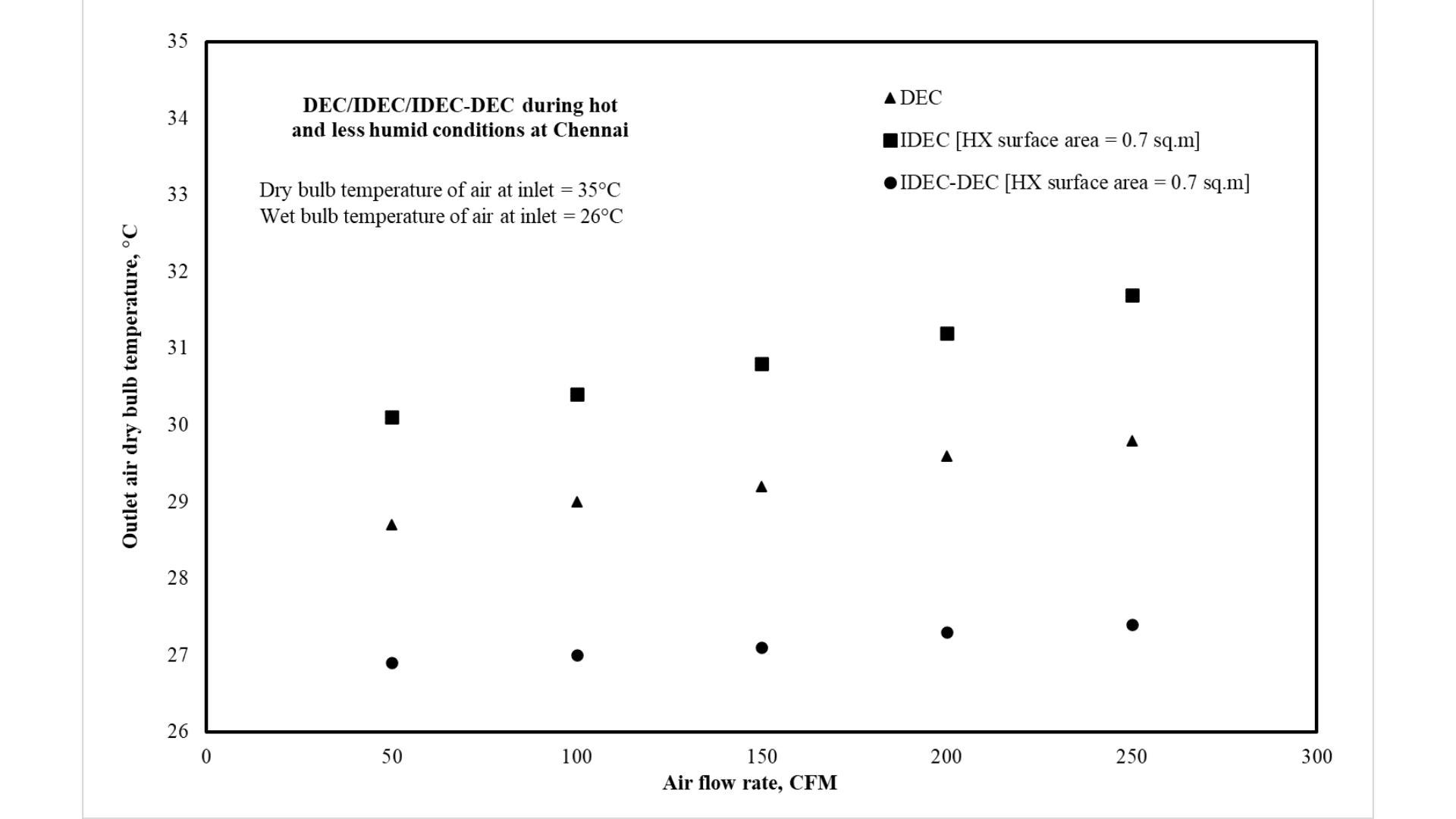
  • Ran parametric studies on the effect of inlet temperature, humidity, and airflow velocity on cooling performance and saturation efficiency
  • Conducted physical experiments on the built prototype — varying airflow rates and measuring temperature profiles
  • Analysed and compared experimental results against numerical predictions to identify model accuracy and limitations
Project Phases

From model to prototype.

I — Numerical
MATLAB Simulation
Developed models of the wet and dry cooling channels. Ran parametric studies showing how operating variables — inlet temperature, humidity, air velocity — affect saturation efficiency and outlet supply air conditions. Identified key design parameters for the physical build.
II — Experimental
Prototype & Validation
Tested a working evaporative cooler with axial fan, cellulose cooling pad, pump, spray nozzles, and a fin-and-tube heat exchanger. Ran experiments at different airflow rates. Measured temperature drop, wet-bulb effectiveness, and saturation efficiency against predicted values.
Two-stage evaporative cooler

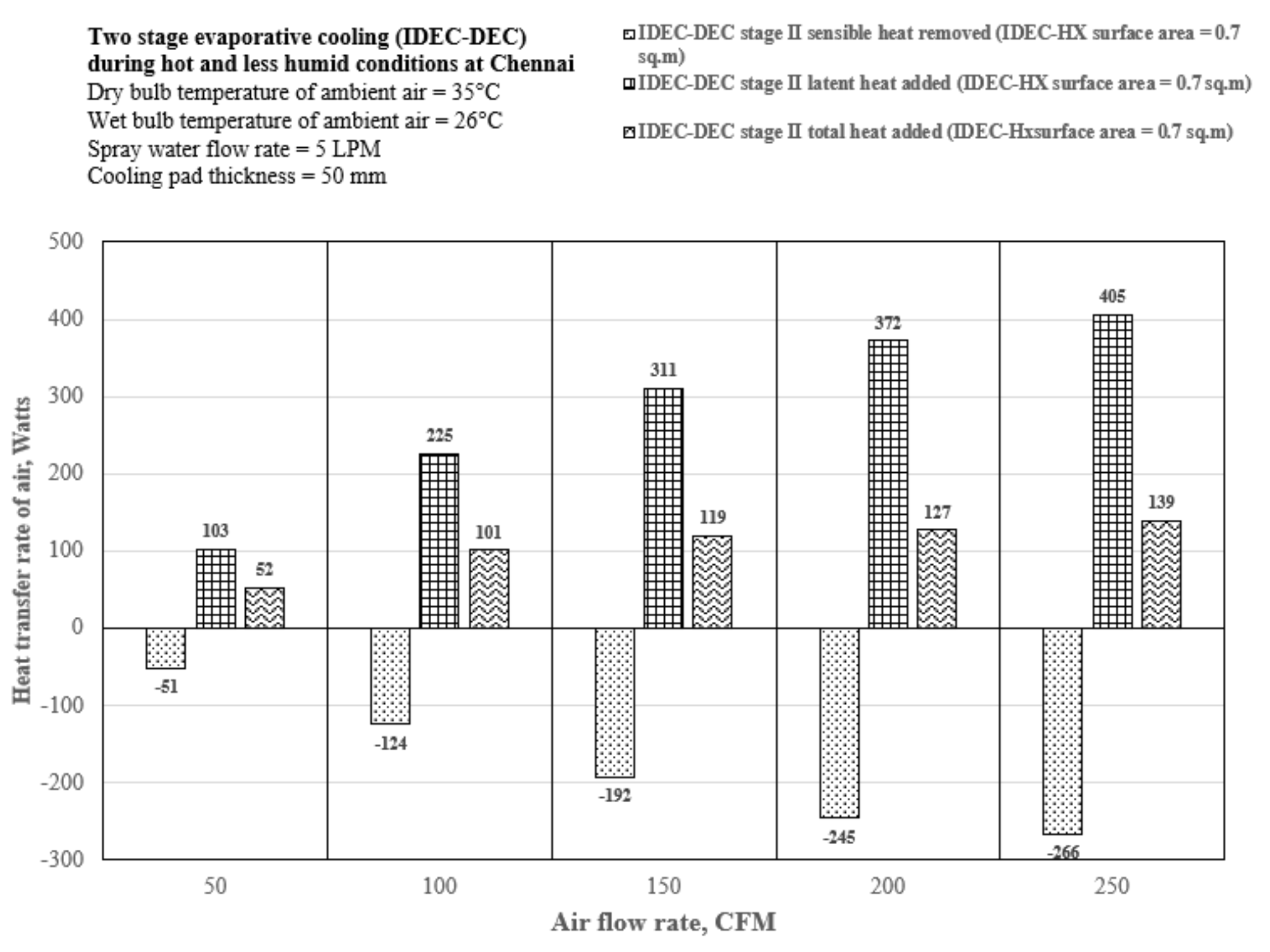
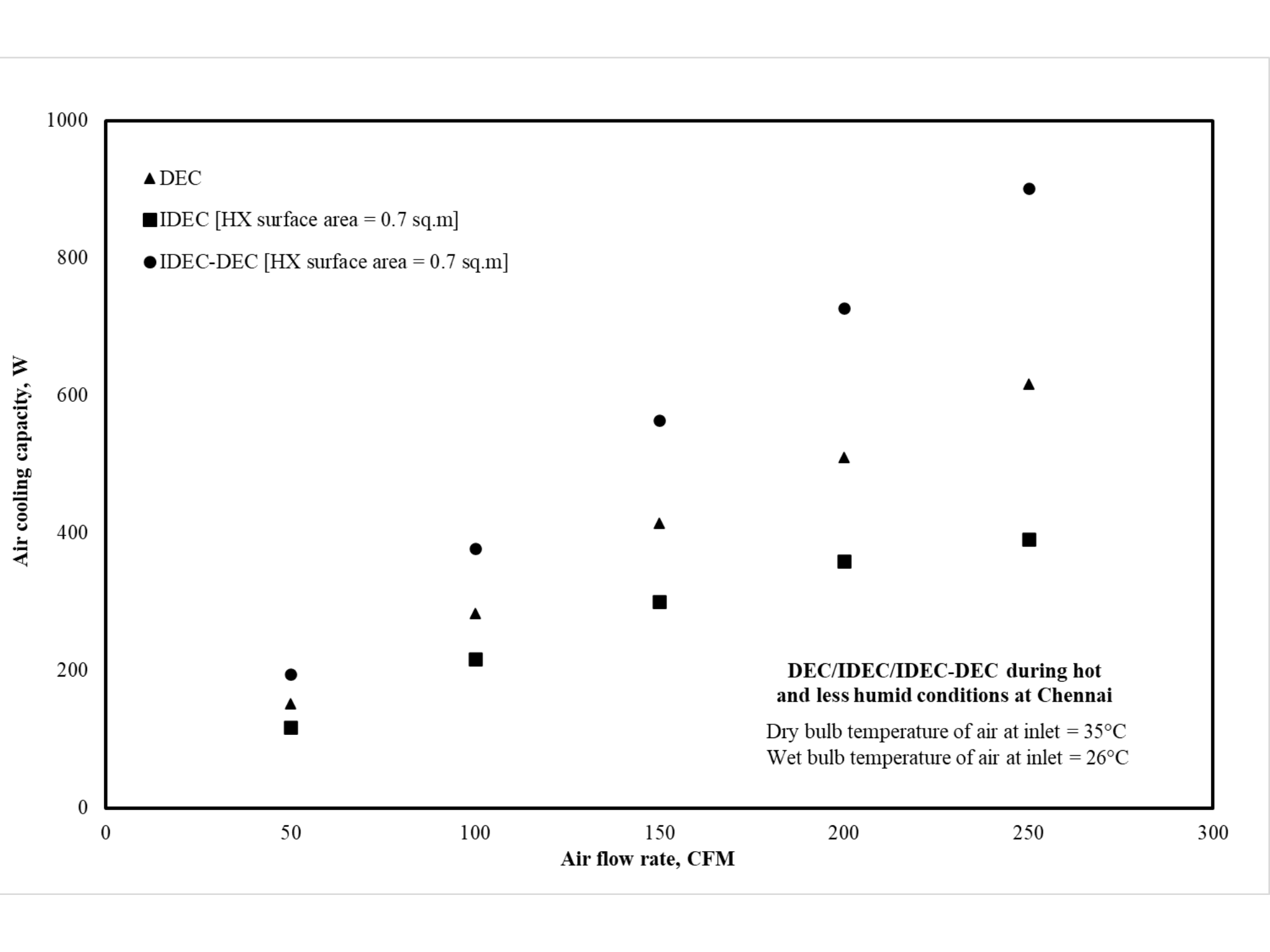
Simulated Air Cooling Capacity Vs Airflow rate

Cooler prototype

Experimental Air Cooling Capacity Vs Airflow rate

Get in touch

Let's collaborate.

Connect on LinkedIn →
← PreviousSolar Dryer All projects →Back to Work