Gamified Ankle Rehabilitation.

Turning repetitive ankle exercises into a maze game — because people actually do rehab when it's engaging.

Medical Device Human-Centered Design Python Arduino IMU Sensing 2025 · UC Berkeley
Team
Krishnaa Sudhir Yuka Iwashita Wangari Mbuthia Milit Ranjith Chantal Wang
GUARD ankle rehabilitation device
The Problem

Why patients skip their rehab.

Physical therapy for ankle injuries is clinically effective — but only if patients actually do it. Interviews with a physical therapist and a recovering patient surfaced the same story: at-home rehab exercises are repetitive, provide no feedback on correctness, and patients lose motivation quickly.

Without consistent exercise, recovery stalls and reinjury risk climbs. The real problem isn't medical — it's motivational.

The Solution

Move your foot, move the character.

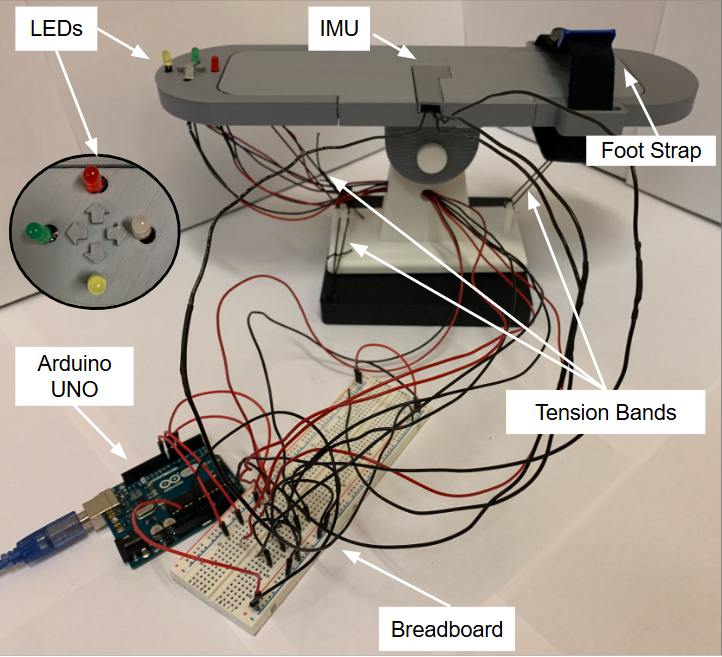
GUARD (Gamified Ultimate Ankle Rehabilitation Device) is a foot-mounted platform that maps ankle motion to a custom maze navigation game. Dorsiflex to go forward, plantarflex to go back, abduct and adduct to turn.

An IMU sensor detects motion in real time. LEDs confirm when the correct range of motion is achieved. The maze can only be completed if all four prescribed movements are used — making the therapy the mechanic itself.

My Role

What I built.

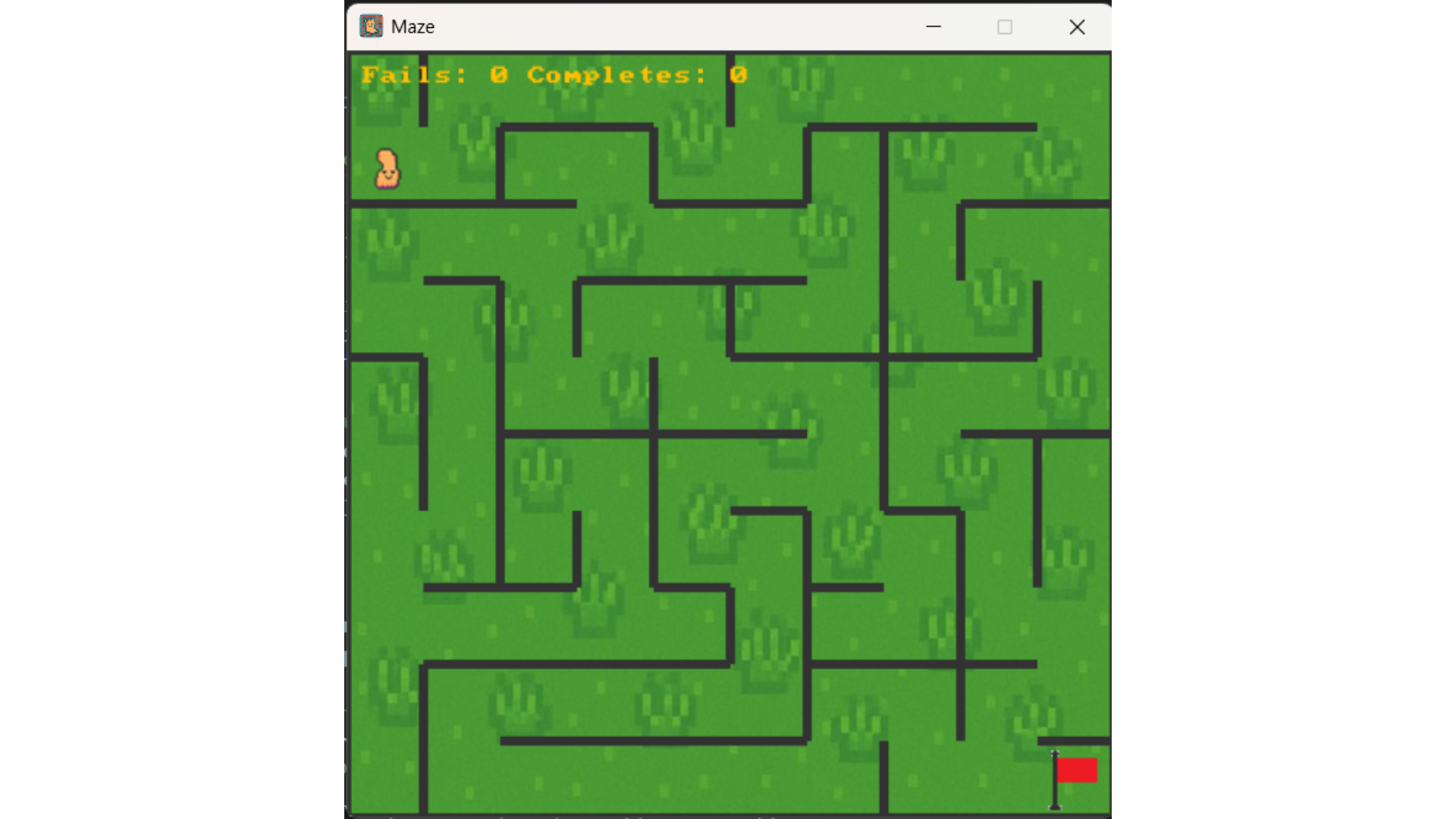
My work centred on the software interface layer — the part the patient actually sees. I built the front-end of the maze game in Python, including procedural maze generation that creates a fresh layout every session.

I also translated raw IMU data into in-game directional commands — calibrating the sensor readings so foot movements map intuitively to character motion without lag or jitter.

On the electronics side, I handled the integration between the IMU, Arduino firmware, and LED feedback system — ensuring the threshold logic triggers correctly when each range of motion is achieved.

Python · game front-end Procedural maze generation Arduino IMU calibration Electronics integration User testing
My contributions
  • Built the full front-end of the maze navigation game in Python
  • Developed the procedural maze generation algorithm for fresh layouts each session
  • Translated IMU (MPU6050) readings into directional in-game commands with calibrated thresholds
  • Integrated electronics with Arduino firmware including LED confirmation feedback
  • Participated in user testing and Pugh chart evaluation of design alternatives
  • Compiled and edited the project demo video
Design Process

From interviews to prototype.

01
User Research
Interviews with a physical therapist and recovering patient identified non-compliance as the core failure mode — not ability, always motivation.
02
Ideation
20 ideas generated and evaluated on a Pugh chart against manufacturability, cost, and stakeholder alignment. Gamified ROM device scored highest across all criteria.
03
Prototyping
Four physical iterations — cardboard looks-like, two pedal variants, and a final 3D-printed footplate with hinged shaft. Each broke in ways that shaped the next version.
04
User Testing
Real participants navigated the maze while we observed motion detection accuracy. Feedback drove clearer instructions, better calibration, and a smoother game feel.
The Device

How it looks & works.

GUARD ankle rehabilitation device

Physical prototype — 3D-printed footplate with IMU

GUARD Python maze game interface

Python maze game interface

Get in touch

Let's collaborate.

Connect on LinkedIn →
← All projectsBack to Work Next →Rockabye Inflatable Blanket